CATHEDRAL OF SYRACUSE
In the heart of Ortigia, the Cathedral of Syracuse is a unique monument where history, art and spirituality have been intertwined for over 2,500 years.
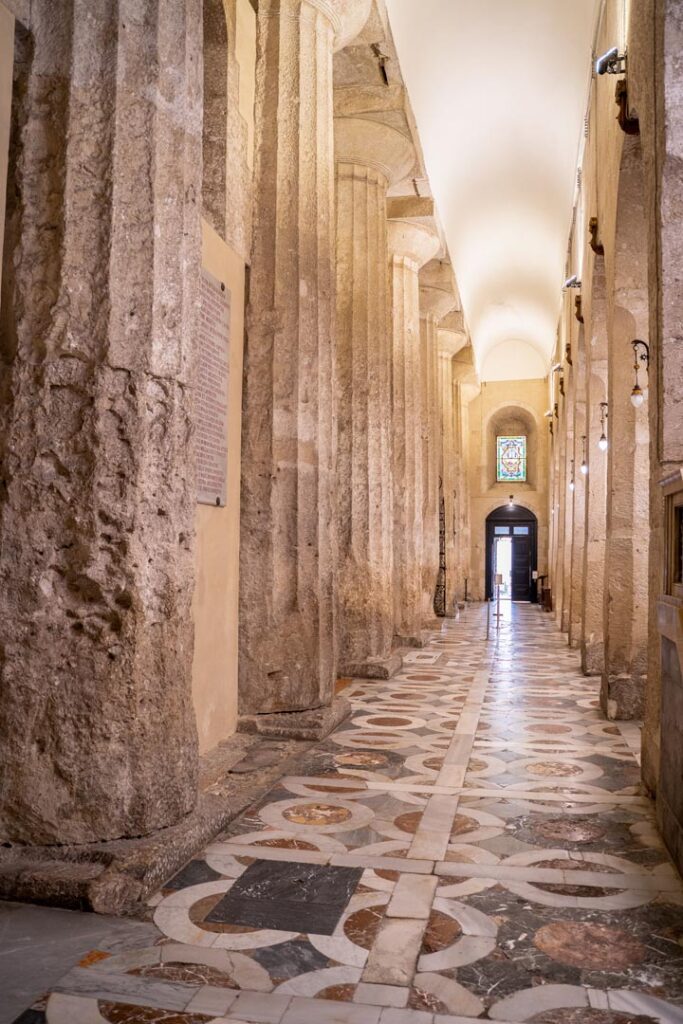
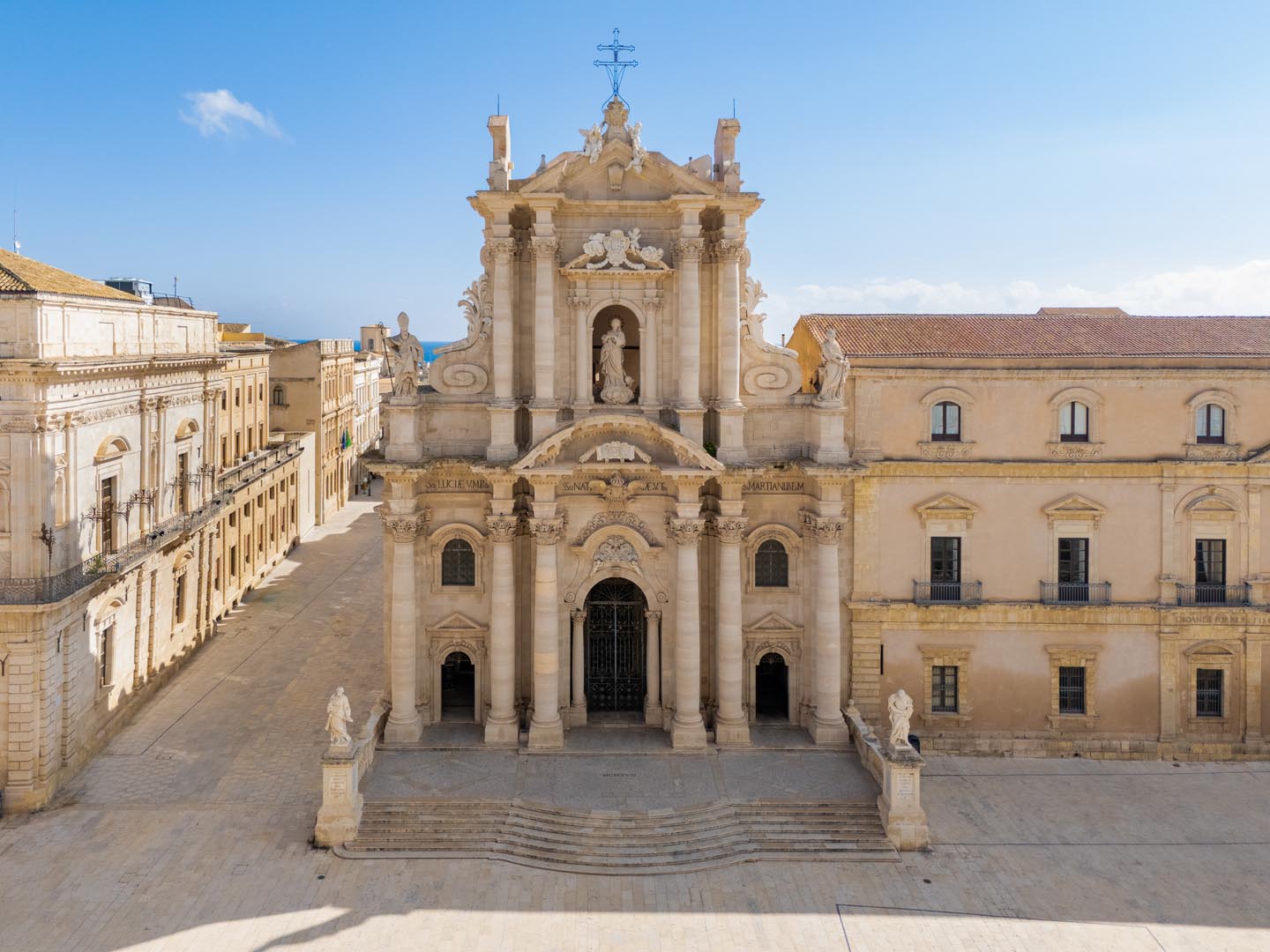
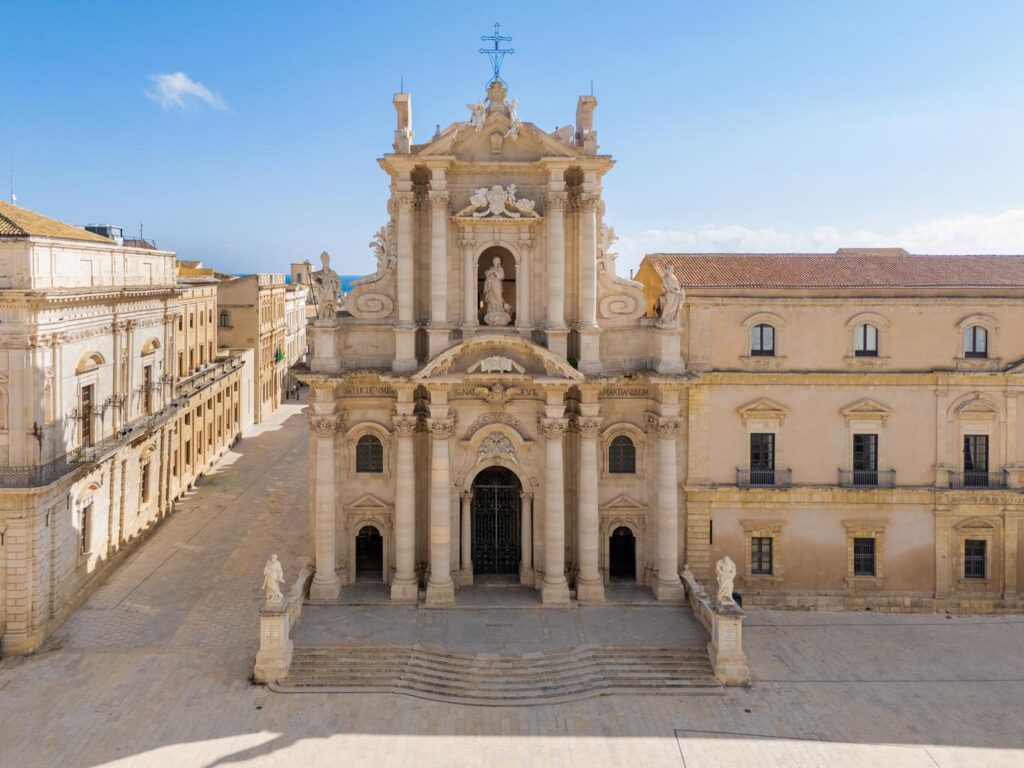
Originally built as the Temple of Athena in the 5th century BC, it still preserves the imposing Doric columns incorporated into the walls. Transformed into a Christian church in the 7th century AD, it was stripped of its furnishings and decorations during the Arab domination, before being reconsecrated by the Normans in 1085. After the earthquake of 1693, its façade was rebuilt in splendid Sicilian Baroque style, giving the Cathedral of Syracuse the scenographic appearance that today dominates Piazza Duomo. Declared as a UNESCO World Heritage Site, the Cathedral of Syracuse is a true book of stone, where history, art and faith converge.
THE TEMPLE OF ATHENA
Built in 480 BC at the behest of the tyrant Gelon, the Temple of Athena celebrated Syracuse’s victory over the Carthaginians at Himera.
Constructed in perfect Doric style, it was an imposing sacred structure dominating the acropolis of Ortigia. Cicero described it in the Verrines as a magnificent temple, adorned with 27 paintings depicting Sicilian kings and tyrants, while the entrance doors were embellished with gold and ivory friezes. According to Athenaeus, a gigantic gilded bronze shield bearing the effigy of Athena rose above the temple, reflecting sunlight and serving as a beacon for sailors heading toward the port of Syracuse.
A masterpiece of Doric architecture, imposing and perfectly proportioned. The temple, which stood on a large crepidoma measuring 56 metres in length and 22 metres in width, was a hexastyle peripteral structure, doubly in antis. The six columns on the front façades and the fourteen along the sides rose eight metres from a three-stepped stylobate, with a lower diameter of 1.90 metres. Each column featured 20 flutes, while the capitals adhered to the classical canons of the Doric order.
xThe pronaos faced east, while the opisthodomos faced west. Even today, visitors can admire the stylobate on which the columns rest from the exterior of the Cathedral, along with the architrave, triglyphs, and plain metopes. Inside, in addition to the columns themselves, the original dimensions of the peristyle and the naos can still be clearly identified.
THE CHRISTIAN CHURCH
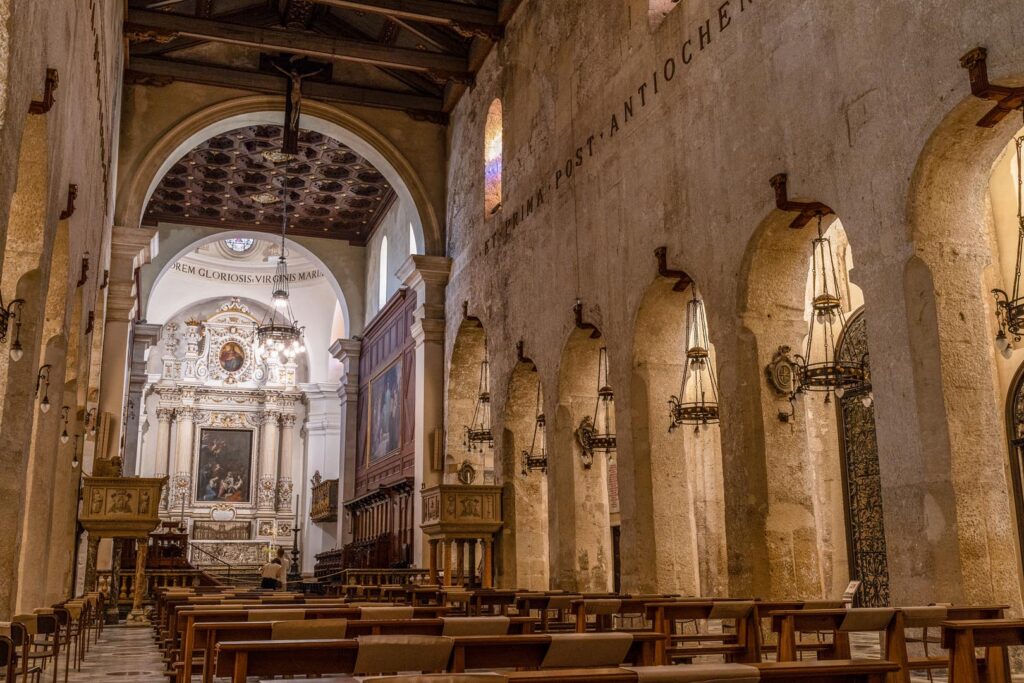
In the 6th century AD, during Byzantine rule, the majestic Doric structure was transformed into a Christian church. The spaces between the columns were enclosed to form the side aisles, while eight arches were opened in the naos, creating the central nave.
In the 7th century, the church was consecrated to the Blessed Virgin Mary, becoming the Cathedral of Syracuse. During the Arab domination (878–1091), it was stripped of its furnishings and decorations. With the arrival of the Normans, the walls of the central nave were raised and seven splayed windows were opened to improve interior lighting. The façade was embellished with a tall bell tower.
The earthquake of 1693 caused the collapse of the façade and bell tower, making their reconstruction necessary.
In the following period, the imposing 18th-century façade was built, an authentic masterpiece of the late Sicilian Baroque. The interior was enriched with altars and elegant decorative stuccoes.
Between the 18th and 19th centuries, the Cathedral experienced a period of decline, leading to its closure in 1906 due to structural issues. Between 1909 and 1927, restoration works brought to light the original grandeur of the Doric temple, creating a perfect balance between Greek, medieval and Baroque art, which still makes the Cathedral of Syracuse a unique place in the world.
ART AND FAITH
The Cathedral of Syracuse is not only a monument of extraordinary historical significance, but also a place where sacred art narrates centuries of devotion and beauty.
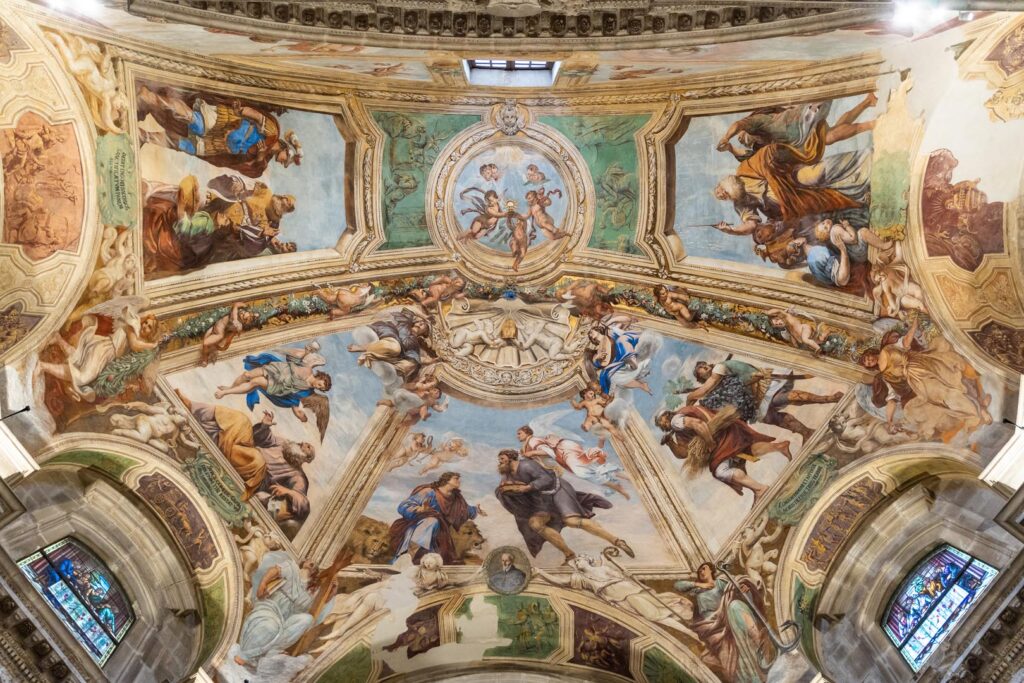
Statues, frescoes and sculptures enrich the interior spaces, guiding visitors along a path that weaves together faith, art and beauty.
- Madonna della Neve: A masterpiece by Antonello Gagini, representing the Mater Lactans. The soft drapery and gentle features convey sorrow and melancholy, enhancing the grace and emotional depth of the sculpture.
- Madonna del Piliere: A depiction of Byzantine origin. The Virgin, wrapped in a dark blue mantle, holds the globe (a symbol of universal dominion) in her left hand and blesses with her right.
- Chapel of the Most Holy Sacrament: The 18th-century frescoes represent the Eucharistic mystery. Architect Luigi Vanvitelli designed the elegant Eucharistic ciborium, inspired by Bernini’s baldachin in St. Peter’s Basilica.
- Silver Simulacrum of Saint Lucia: The heart of the city’s devotion. The 16th-century statue depicts Saint Lucia holding the dish with her eyes and the palm, symbols of martyrdom and victory over death. Every year, in December and May, it is carried out in procession, renewing the tradition that binds Syracuse to its patron saint.
USEFUL INFORMATION
Location:
Piazza Duomo, Ortigia, Siracusa.
Ticket Office Opening Hours:
January – February – March – April
9.00 am – 5.30 pm
Closed on: sunday
May – June – July – August – September
9.00 am – 6.30 pm
Closed on: sunday
October – November – December
9.00 am – 5.30 pm
Closed on: sunday
Closed on:
January: 1, 13, 23, 24
April: 3, 4
May: 2
December: 8, 11, 12, 13, 25
Available services:
- Entrance fee
- Mandatory guided tour in Italian/English by reservation, VR experience included in the visit.
- VR Rental
- Infopoint
- Easy access for disabled people (no architectural barriers)
Contacts:
info@secretsiracusa.it
General information
+39 093164694
Mon–Sun 9:30 am – 12:30 pm / 2:30 pm – 5:30 pm
Groups and agencies:
+39 09311561472
Mon–Fri 9:00 am – 5:00 pm
Experiences
in Syracuse
Enjoy a unique experience in Syracuse: cultural itineraries, authentic flavors, and personalized services. Discover the millennia-old history, art, and traditions of the island of Ortigia through a journey tailored just for you.